 Author adminPosted on Categories Criminal law Leave a comment on Jussie Smollett fake race hate crime hoax conviction overturned

American actor Jussie Smollett claimed to have been the victim of a hate crime. His story was inherently implausible – that two MAGA hat wearing homophobic white supremists saw him in the early hours of downtown Chicago – a deeply Democratic party voting area populated with many African Americans – and beat him up while it was snowing.
Continue reading “Jussie Smollett fake race hate crime hoax conviction overturned”
Author adminPosted on Categories civil litigation, Criminal law 1 Comment on Types of appeals in Queensland and the Federal Courts

Appeals in the law are creatures of statute: Attorney-General v Sillem [1864] EngR 352; (1864) 10 HLC 704 at 720-721, Mickelberg v The Queen [1989] HCA 35, Deane J at [4], R v Ferguson; ex parte A-G (Qld) [2008] QCA 227 at [20]. In other words, they never existed at common law, but were instead created by legislation. Therefore, appeals can only be made and determined in accordance with statutory provisions and Court rules about appeals, and primary regard must be had to them. The “common law” of appeals is the case law of interpretation of such provisions.
The joint judgment of Gleeson CJ, Gummow and Kirby JJ in Fox v Percy (2003) 214 CLR 118 distinguished between four types of appeals:
“[20] Appeal is not, as such, a common law procedure. It is a creature of statute. In Builders Licensing Board v Sperway Constructions (Syd) Pty Ltd, Mason J distinguished between (i) an appeal stricto sensu, where the issue is whether the judgment below was right on the material before the trial court; (ii) an appeal by rehearing on the evidence before the trial court; (iii) an appeal by way of rehearing on that evidence supplemented by such further evidence as the appellate court admits under a statutory power to do so; and (iv) an appeal by way of a hearing de novo. There are different meanings to be attached to the word “rehearing”. The distinction between an appeal by way of rehearing and a hearing de novo was further considered in Allesch v Maunz. Which of the meanings is that borne by the term “appeal”, or whether there is some other meaning, is, in the absence of an express statement in the particular provision, a matter of statutory construction in each case.”
It is important for practitioners to understand the different types of appeals, and therefore how they will be considered and determined. Such knowledge is a prerequisite for practitioners to appraise themselves of the prospects of success in such appeals they may act in.
Continue reading “Types of appeals in Queensland and the Federal Courts”
Author adminPosted on Categories Human rights 1 Comment on Labor’s misinformation bill is about controlling public discourse

Ever noticed how terms like ‘misinformation’ and ‘misinformation’ are used to dismiss dissent?
Claire Lehmann, founding editor of Quillette, outlines how the term ‘misinformation’ is used to label contrary points of view, and provides the following examples:
Continue reading “Labor’s misinformation bill is about controlling public discourse”
Author adminPosted on Categories Defamation Leave a comment on John Peros loses defamation claim about Shandee Blackburn murder

In 2013, Shandee Renee Blackburn, a 23 year old woman, was murdered in Mackay whilst walking home alone from her workplace. She had been stabbed 23 times in multiple places including the neck, head, and chest, including defensive wounds on her arms.
On 4 September 2014, Shandee Blackburn’s ex-boyfriend John Peros was arrested and charged for her murder. He was subsequently acquitted by a jury.
Continue reading “John Peros loses defamation claim about Shandee Blackburn murder”
Author adminPosted on Categories Family law Leave a comment on Family law changes now in effect

Last year, the Family Law Amendment Act 2023 was passed. The provisions of this Act are now in effect.
Author adminPosted on Categories Criminal law Leave a comment on Sexual harassment solicitor Owen Hughes again refused practising certificate
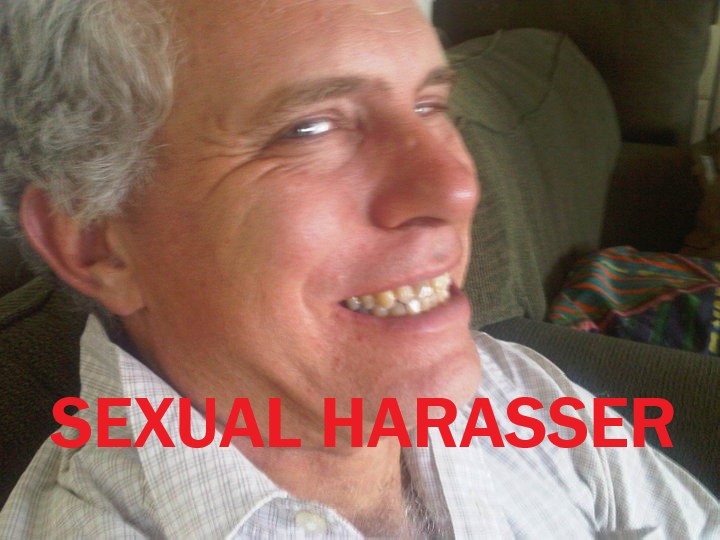
Sexual harassment solicitor Owen Maldwyn Hughes has again been refused a practising certificate in NSW.
Hughes was sued by Catherine Mia Hill, a Junior Solicitor once in his employ.
Continue reading “Sexual harassment solicitor Owen Hughes again refused practising certificate”
Author adminPosted on Categories Criminal law Leave a comment on NSW DPP Sally Dowling referred to Bureau de Spank

The extraordinary war between NSW Director of Public Prosecutions Sally Dowling SC and at least part of the NSW District Court continues.
Continue reading “NSW DPP Sally Dowling referred to Bureau de Spank”
Author adminPosted on Categories Criminal law Leave a comment on Daniel Keneally’s conviction for fabricating evidence upheld on appeal

The son of former NSW Labor premier Kristina Keneally has had his appeal dismissed.
Constable Daniel Keneally had a telephone conversation in February 2021 with a man named Luke Moore. Keneally then submitted a report that falsely claimed Moore had made threats about wanting a Goulburn detective “dead” and had said he was “as good as gone”. This resulted in Moore being charged with using a carriage service to menace and threaten to kill, and refused bail, resulting in him spending time in jail for three weeks.
Moore had fortunately recorded his discussion with Constable Keneally, and the recording showed that Keneally’s report was false.
Continue reading “Daniel Keneally’s conviction for fabricating evidence upheld on appeal”
Author adminPosted on Categories Criminal law Leave a comment on Chris Dawson’s murder appeal dismissed

Former high school teacher and rugby league player Chris Dawson has been unsuccessful in his appeal against his murder conviction.
In August 2022, Chris Dawson was found guilty of his first wife’s murder.
His first wife Lynette Dawson (nee Simms) went missing in 1982, and has not been found since. She left behind their two young daughters Shanelle and Sherryn, then aged four and two.
Author adminPosted on Categories Criminal law Leave a comment on Donald Trump convicted over hush money payments

A Manhattan jury has found Former US President Donald Trump guilty in his New York criminal trial.
The charges arose from events in 2016, when a company set up by Trump’s then-lawyer Michael Cohen allegedly paid adult film actress Stormy Daniels ‘hush money’ in relation to an alleged historical sexual encounter Trump had with Daniels. Trump was accused of falsifying business records to hide the payments. It was alleged Trump later reimbursed Cohen.
Trump denied the affair with Daniels and claimed he was not aware of Cohen’s payment to Daniels.
Continue reading “Donald Trump convicted over hush money payments”


